


-
Book Overview & Buying
-
Table Of Contents

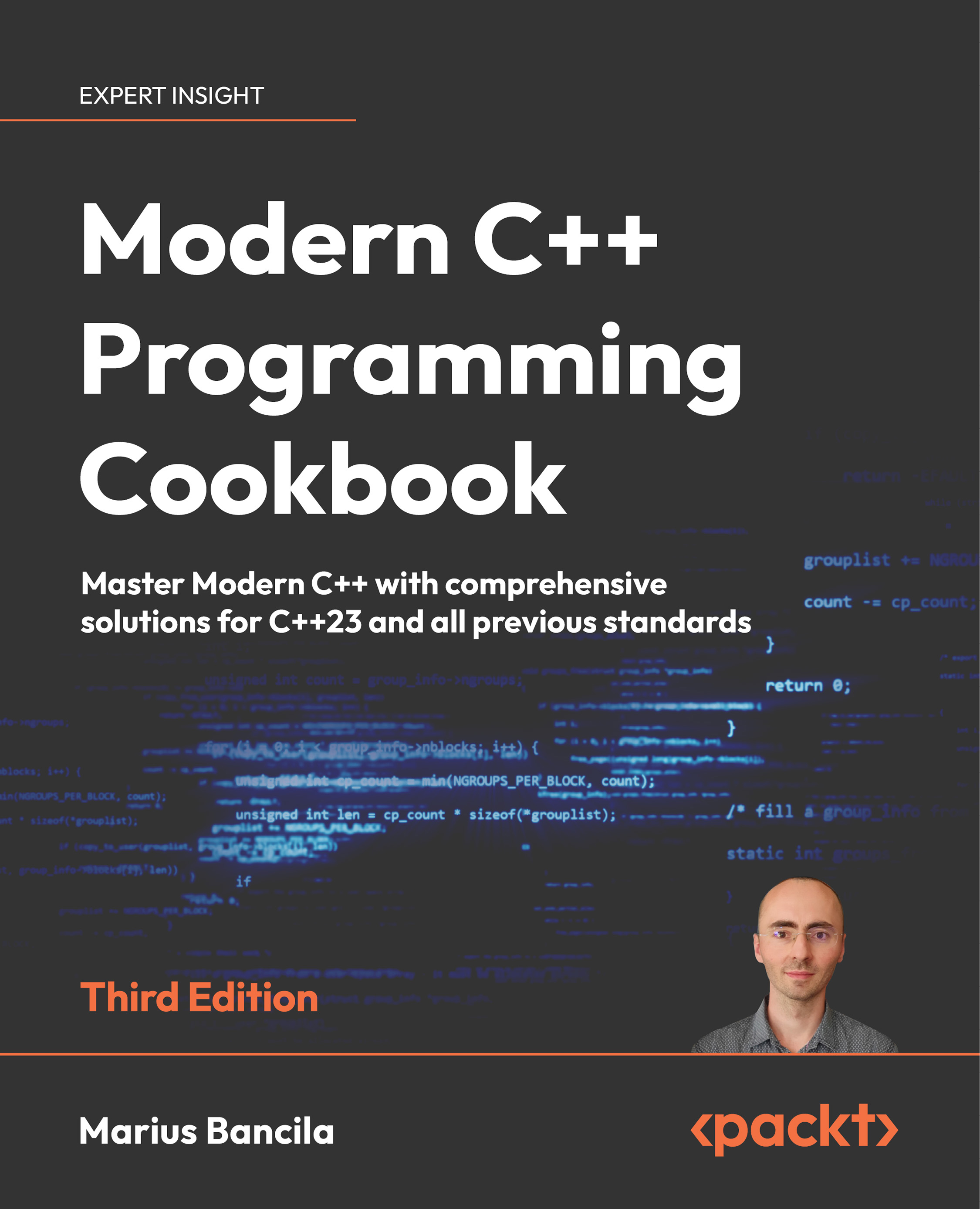
Modern C++ Programming Cookbook - Third Edition
By :


Modern C++ Programming Cookbook
By:
Overview of this book
The updated third edition of Modern C++ Programming Cookbook addresses the latest features of C++23, such as the stacktrace library, std::expected and std::mdspan classes, the header, formatting library improvements, and updates to the ranges library. It also gets into more C++20 topics not previously covered, such as sync streams and source_location.
The book is organized into practical recipes covering a wide range of real-world problems, helping you find the solutions you need quickly. You’ll find coverage of all the core concepts of modern C++ programming and features and techniques from C++11 through to C++23, meaning you’ll stay ahead of the curve by learning to incorporate the newest language and library improvements.
Beyond the core concepts and new features, you’ll explore recipes related to performance and best practices, how to implement useful patterns and idioms, like pimpl, named parameter, attorney-client, and the factory pattern, and how to complete unit testing with the widely used C++ libraries: Boost.Test, Google Test, and Catch2.
With the comprehensive coverage this C++ programming guide offers, by the end of the book you’ll have everything you need to build performant, scalable, and efficient applications in C++.
Table of Contents (15 chapters)
Preface


 Free Chapter
Learning Modern Core Language Features
Working with Numbers and Strings
Exploring Functions
Preprocessing and Compilation
Standard Library Containers, Algorithms, and Iterators
General-Purpose Utilities

Working with Files and Streams
Leveraging Threading and Concurrency
Robustness and Performance
Implementing Patterns and Idioms
Exploring Testing Frameworks
C++ 20 Core Features
Other Books You May Enjoy
Index


