
Sign In Start Free Trial
Account

Add to playlist

Create a Playlist

Modal Close icon
You need to login to use this feature.
  • Book Overview & Buying SharePoint Development with the SharePoint Framework
  • Table Of Contents Toc
SharePoint Development with the SharePoint Framework

SharePoint Development with the SharePoint Framework

By : Jussi Roine, Olli Jääskeläinen
4.2 (5)
close
close
SharePoint Development with the SharePoint Framework

SharePoint Development with the SharePoint Framework

4.2 (5)
By: Jussi Roine, Olli Jääskeläinen

Overview of this book

SharePoint is one of Microsoft's best known web platforms. A loyal audience of developers, IT Pros and power users use it to build line of business solutions. The SharePoint Framework (SPFx) is a great new option for developing SharePoint solutions. Many developers are creating full-trust based solutions or add-in solutions, while also figuring out where and how SPFx fits in the big picture. This book shows you how design, build, deploy and manage SPFx based solutions for SharePoint Online and SharePoint 2016. The book starts by getting you familiar with the basic capabilities of SPFx. After that, we will walk through the tool-chain on how to best create production-ready solutions that can be easily deployed manually or fully automated throughout your target Office 365 tenants. We describe how to configure and use Visual Studio Code, the de facto development environment for SPFx-based solutions. Next, we provide guidance and a solid approach to packaging and deploying your code. We also present a straightforward approach to troubleshooting and debugging your code an environment where business applications run on the client side instead of the server side.
Table of Contents (14 chapters)
close
close

SharePoint document libraries

SharePoint sites store information, which requires different types of containers. One type of container is a document library. A document library can be used to store files, including Office documents, text files, media files, and similar content. Most SharePoint sites have, by default, one or more document libraries provisioned and you are free to create more as needed.

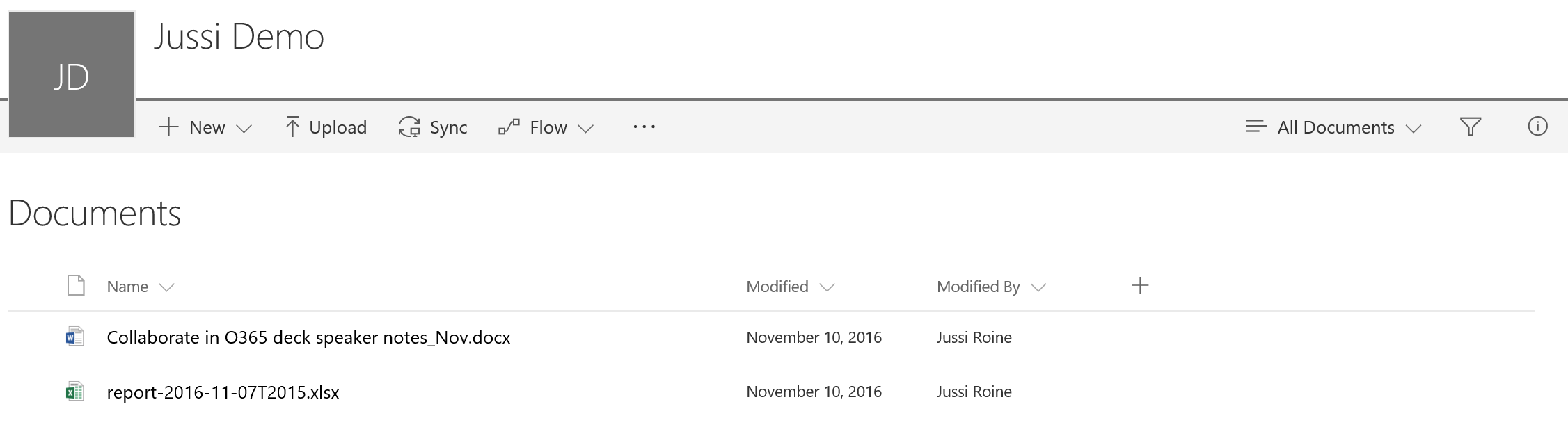
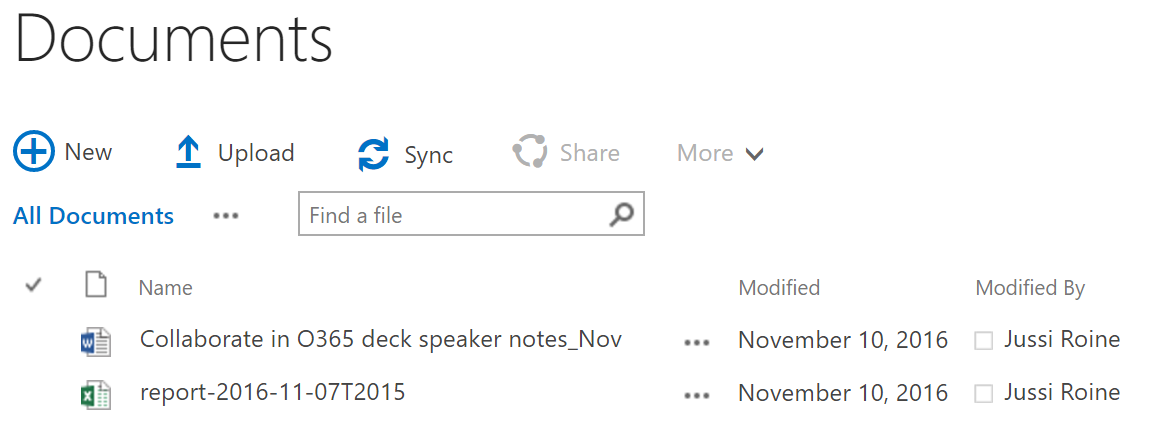
Document libraries can either have a modern user experience or a classic user experience. This is due to the changes Microsoft is rolling out over several months (or sometimes even years), which in turn allows for customers to decide when to deploy new and drastic changes, such as a new user experience for something as central as a document library.

The modern user experience is fully responsive and has a fresh look. All essential tooling is available in a simple toolbar and the ribbon interface from the Office 2007/2010 era is gone:
The classic experience is still very much in use; it is supported and, in certain scenarios, works better. This holds especially true for situations where users have used SharePoint Online for several years and are very accustomed to the classic experience:
Both views relay almost identical information, but the classic experience also exposes the ribbon UI, which in turns hides (or shows, depending on context) a lot of additional tooling:
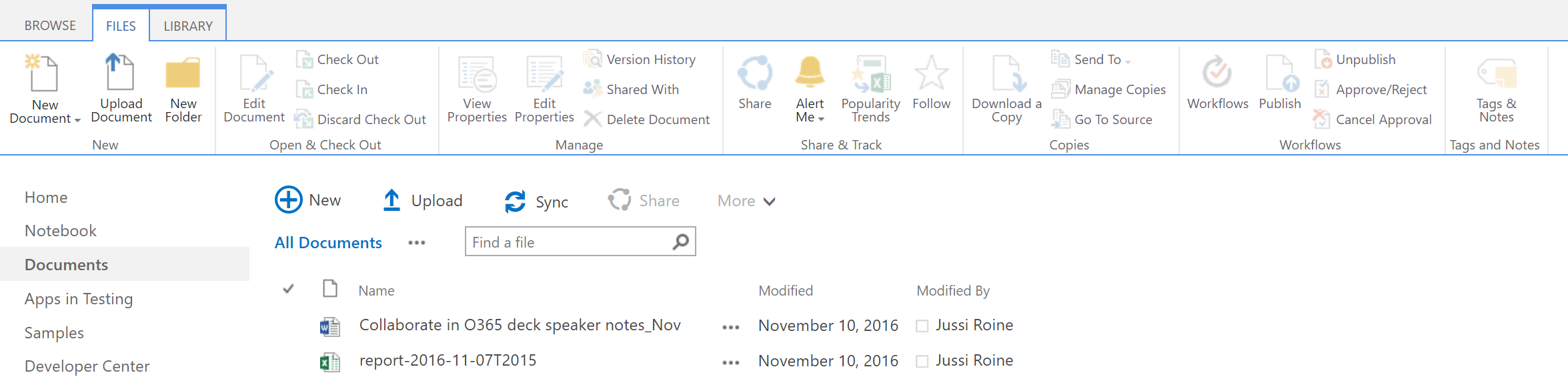
One of the challenges for developers with the ribbon UI has always been the cumbersome approach to modifying, hiding, or adding custom buttons in the ribbon. While it's possible, it's certainly not a task customers would request initially. Users are familiar with the default buttons, and changing or disabling essential buttons for something else will most certainly confuse users.

Each document in a document library holds metadata. Metadata is a larger topic, and not in the scope of this book, suffice to say that metadata in SharePoint Online document libraries is used to reveal and store information about files, and data in general. Metadata can be used to search files and different views on data can be shown, based on metadata filtering, sorting, and selections.

The classic view for modifying metadata is very bare bones but also easy to use:
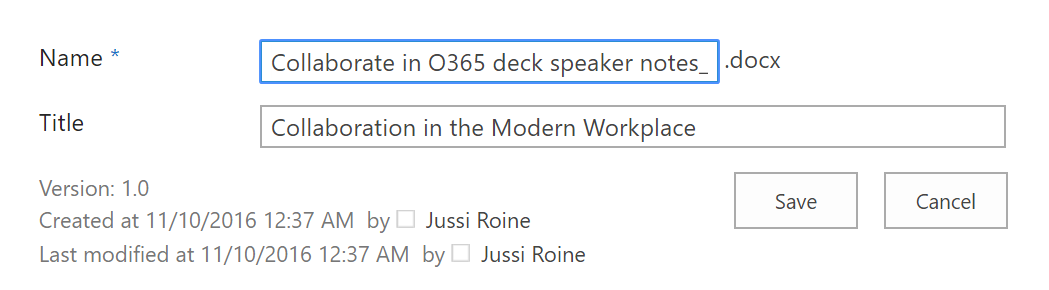
The modern view for modifying metadata is more modern, but might involve a little learning curve for users accustomed to the classic view:
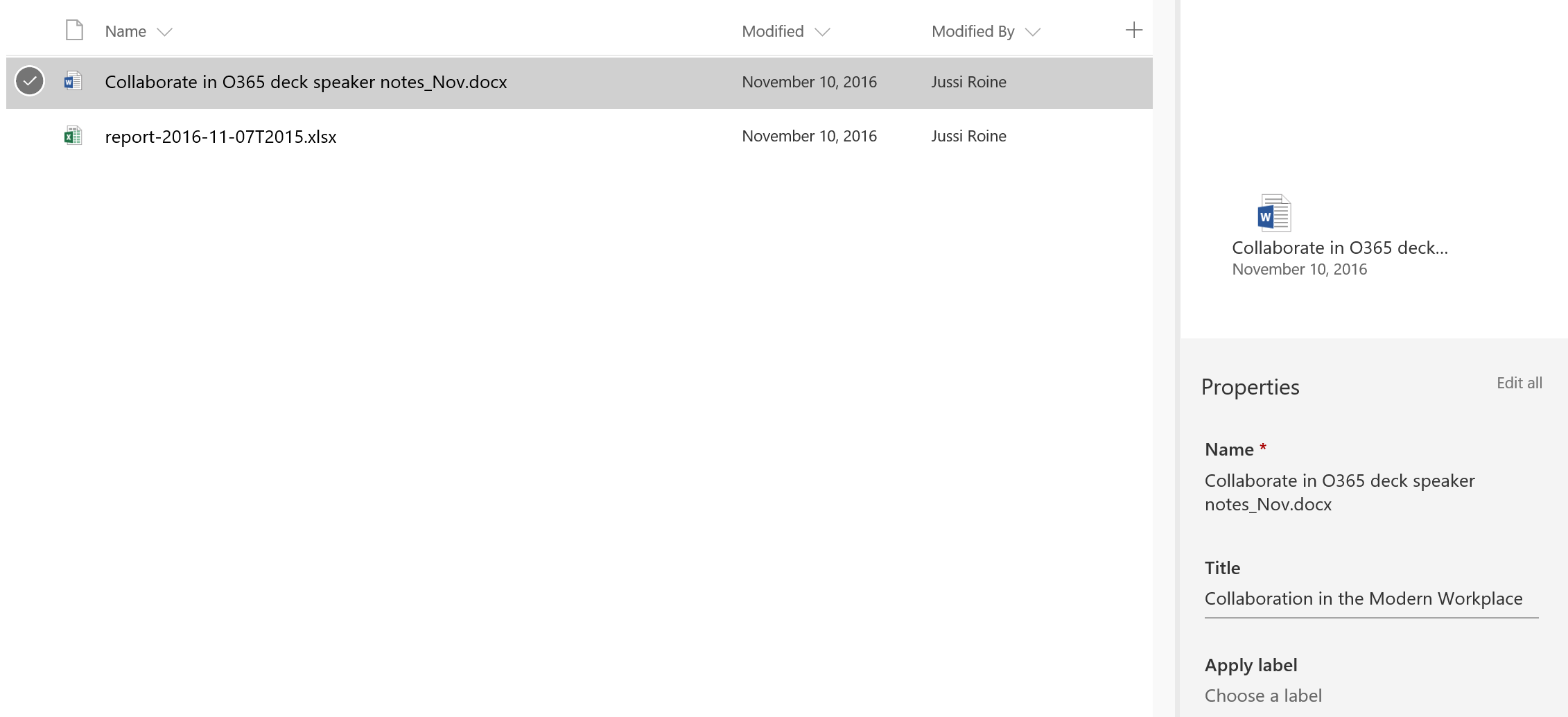
Notice how metadata in the modern view is shown upon selection of a file, while in the classic view the view is completely different and the context of other files is hidden.

CONTINUE READING
83
Tech Concepts
36
Programming languages
73
Tech Tools
Icon Unlimited access to the largest independent learning library in tech of over 8,000 expert-authored tech books and videos.
Icon Innovative learning tools, including AI book assistants, code context explainers, and text-to-speech.
Icon 50+ new titles added per month and exclusive early access to books as they are being written.
SharePoint Development with the SharePoint Framework
notes
bookmark Notes and Bookmarks search Search in title playlist Add to playlist download Download options font-size Font size

Change the font size

margin-width Margin width

Change margin width

day-mode Day/Sepia/Night Modes

Change background colour

Close icon Search
Country selected

Close icon Your notes and bookmarks

Confirmation

Modal Close icon
claim successful

Buy this book with your credits?

Modal Close icon
Are you sure you want to buy this book with one of your credits?
Close
YES, BUY

Submit Your Feedback

Modal Close icon
Modal Close icon
Modal Close icon