


-
Book Overview & Buying
-
Table Of Contents

Creators of Intelligence
By :


Creators of Intelligence
By:
Overview of this book
A Gartner prediction in 2018 led to numerous articles stating that "85% of AI and machine learning projects fail to deliver.” Although it's unclear whether a mass extinction event occurred for AI implementations at the end of 2022, the question remains: how can I ensure that my project delivers value and doesn't become a statistic?
The demand for data scientists has only grown since 2015, when they were dubbed the new “rock stars” of business. But how can you become a data science rock star? As a new senior data leader, how can you build and manage a productive team? And what is the path to becoming a chief data officer?
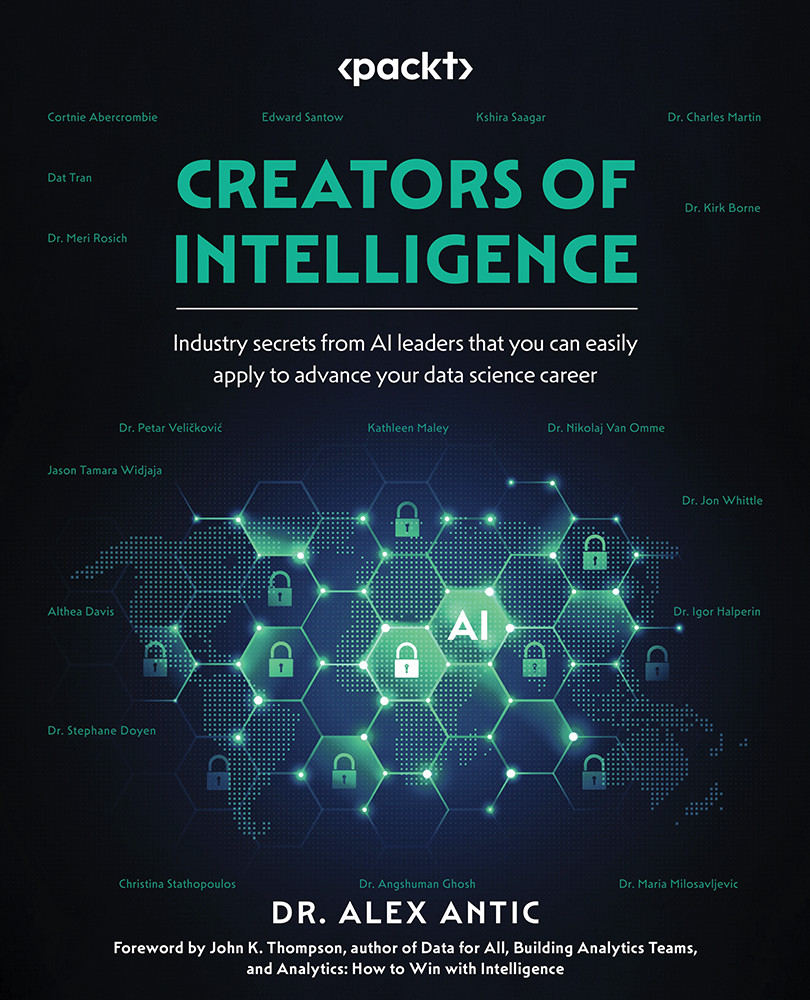
Creators of Intelligence is a collection of in-depth, one-on-one interviews where Dr. Alex Antic, a recognized data science leader, explores the answers to these questions and more with some of the world's leading data science leaders and CDOs.
Interviews with: Cortnie Abercrombie, Edward Santow, Kshira Saagar, Charles Martin, Petar Veličković, Kathleen Maley, Kirk Borne, Nikolaj Van Omme, Jason Tamara Widjaja, Jon Whittle, Althea Davis, Igor Halperin, Christina Stathopoulos, Angshuman Ghosh, Maria Milosavljevic, Dr. Meri Rosich, Dat Tran, and Stephane Doyen.
Table of Contents (23 chapters)
Preface


Chapter 1: Introducing the Creators of Intelligence
 Free Chapter
Chapter 2: Cortnie Abercrombie Wants the Truth

Chapter 3: Edward Santow vs. Unethical AI
Chapter 4: Kshira Saagar Tells a Story
Chapter 5: Consulting Insights with Charles Martin
Chapter 6: Petar Veličković and His Deep Network
Chapter 7: Kathleen Maley Analyzes the Industry
Chapter 8: Kirk Borne Sees the Stars
Chapter 9: Nikolaj Van Omme Can Solve Your Problems
Chapter 10: Jason Tamara Widjaja and the AI People
Chapter 11: Jon Whittle Turns Research into Action
Chapter 12: Building the Dream Team with Althea Davis
Chapter 13: Igor Halperin Watches the Markets
Chapter 14: Christina Stathopoulos Exerts Her Influence
Chapter 15: Angshuman Ghosh Leads the Way
Chapter 16: Maria Milosavljevic Assesses the Risks
Chapter 17: Stephane Doyen Follows the Science
Chapter 18: Intelligent Leadership with Meri Rosich
Chapter 19: Teaming Up with Dat Tran
Chapter 20: Collective Intelligence
Index


