Sign In Start Free Trial
Account

Add to playlist

Create a Playlist

Modal Close icon
You need to login to use this feature.
  • Book Overview & Buying Hands-On Unity 2020 Game Development
  • Table Of Contents Toc
  • Feedback & Rating feedback
Hands-On Unity 2020 Game Development

Hands-On Unity 2020 Game Development

By : Nicolas Alejandro Borromeo
4.3 (15)
close
close
Hands-On Unity 2020 Game Development

Hands-On Unity 2020 Game Development

4.3 (15)
By: Nicolas Alejandro Borromeo

Overview of this book

Over the years, the Unity game engine has extended its scope from just being about creating video games to building AR/VR experiences, complex simulations, real-time realistic rendering, films, and serious games for training and education. Its features for implementing gameplay, graphics, and customization using C# programming make Unity a comprehensive platform for developing professional-level, rich experiences. With this book, you'll be able to build impressive Unity projects in a step-by-step manner and apply your knowledge of Unity concepts to create a real-world game. Complete with hands-on tutorials and projects, this easy-to-follow guide will show you how to develop your first complete game using a variety of Unity tools. As you make progress, you'll learn how to make the most of the Unity Editor and create scripts using the C# programming language. This Unity game development book will then take you through integrating graphics, sound, and animations and manipulating physics to create impressive mechanics for your games. You'll also learn how to code a simple AI agent to challenge the user and use profiling tools to ensure that the code runs in a performant way. Finally, you'll get to grips with Unity's AR Foundation for creating AR experiences for 3D apps and games. By the end of this book, you'll have developed a complete game and will have built a solid foundation using Unity's tooling ecosystem to develop game projects of any scale.
Table of Contents (24 chapters)
close
close
20
Chapter 20: Building the Project

Creating projects

Now that we have Unity installed, we can start creating our game. To do so, we first need to create a project, which is basically a folder containing all the files that your game will be composed of. These files are called assets and there are different types of them, such as images, audio, 3D models, script files, and so on. In this section, we will see how to manage a project, addressing the following concepts:

  • Creating a project
  • Project structure

Creating a project

As with Unity installations, we will use Unity Hub to manage projects. We need to follow these steps to create one:

  1. Open Unity Hub and click on the Projects button, and then click on NEW, as illustrated in the following screenshot:
    Figure 2.12 – Creating a new project in Unity Hub

    Figure 2.12 – Creating a new project in Unity Hub

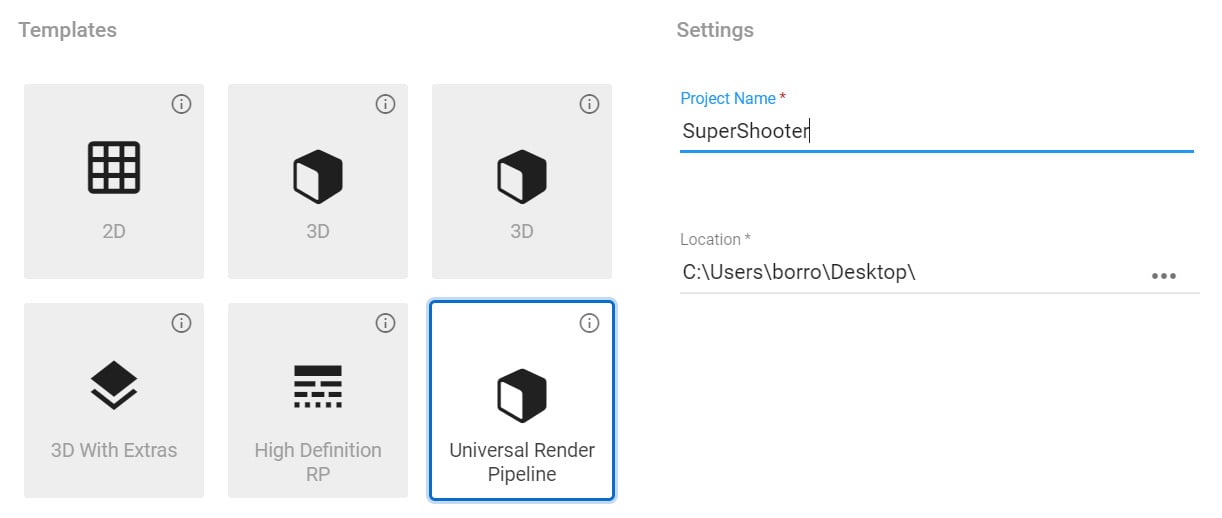
  2. Pick the Universal Render Pipeline template, then a project name and a location, and hit Create. We will be creating a 3D game with simple graphics, prepared to run on every device Unity can be executed on, so the Universal Render Pipeline (or URP) is the better choice for that. In Chapter 6, Materials and Effects with URP and Shader Graph, we will be discussing exactly why. The process can be seen in the following screenshot:
    Figure 2.13 – Selecting the Universal Render Pipeline template

    Figure 2.13 – Selecting the Universal Render Pipeline template

    Important Note:

    Try to put the project in Dropbox, Google Drive, or any cloud-synchronized folder to make sure you always have the project at hand. This project will grow, so make sure you have enough space in that folder. If you don't have enough space in your hosting service, just skip this. If you know how to use Git, that would be a better option.

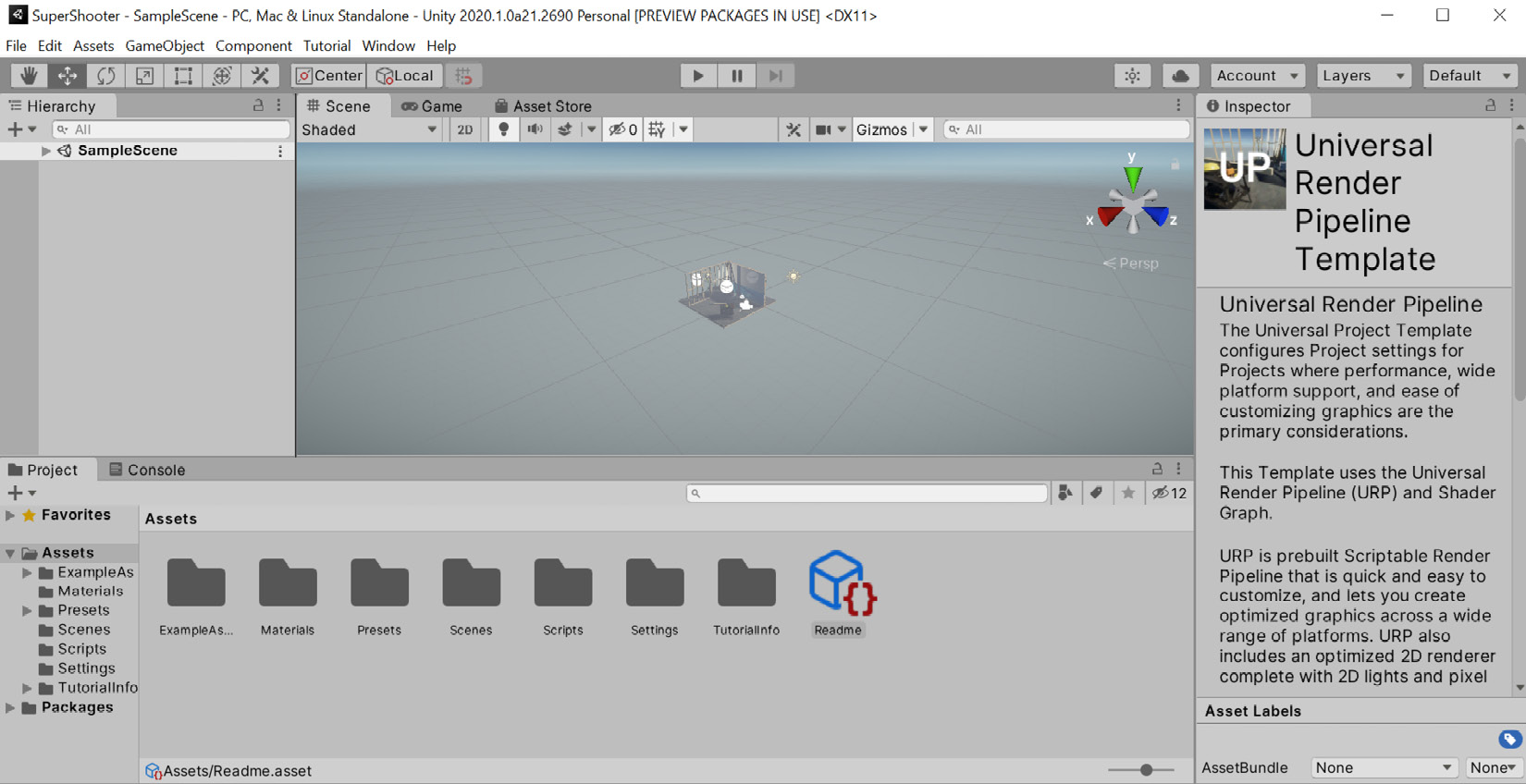
  3. Unity will create and automatically open the project. This can take a while, but after that, you will see a screen similar to the one shown in the following screenshot:
    Figure 2.14 – The Unity Editor window

    Figure 2.14 – The Unity Editor window

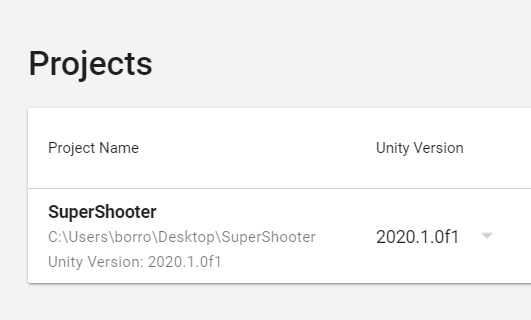
  4. Try closing the window and opening it again, then going back to Unity Hub and picking the project from the list, as follows:
Figure 2.15 – Reopening the project

Figure 2.15 – Reopening the project

Now that we have created the project, let's explore its structure.

Project structure

We have just opened Unity but we won't start using it until the next chapter. Now, it's time to see how the project folder structure is composed. To do so, we need to open the folder in which we created the project. If you don't remember where this is, you can do the following:

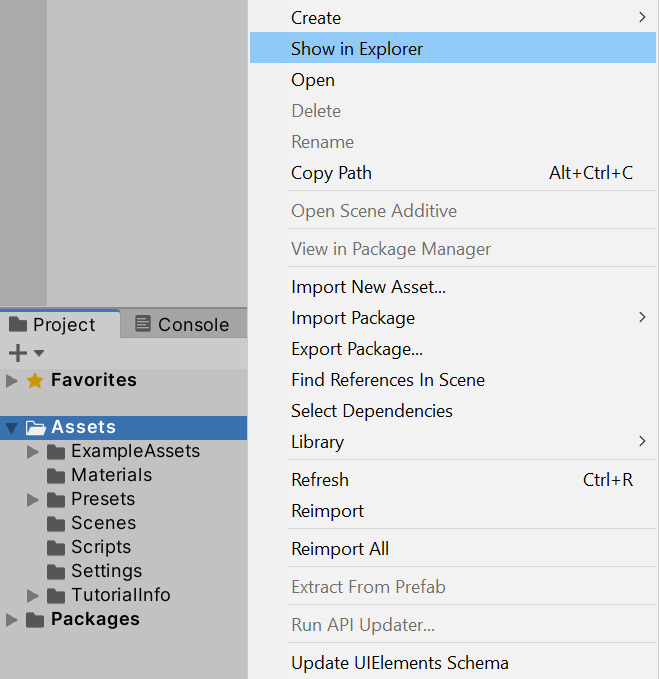
  1. Right-click the Assets folder in the Project panel, located in the bottom part of the editor.
  2. Click the Show in Explorer option. If you are using a Mac, the option is called Reveal in Finder. The following screenshot illustrates this:
Figure 2.16 – Opening the project folder in Explorer

Figure 2.16 – Opening the project folder in Explorer

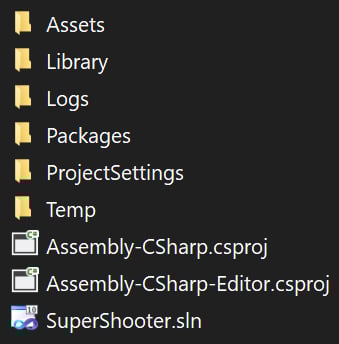
Then, you will see the following folder structure:

Figure 2.17 – Unity project folder structure

Figure 2.17 – Unity project folder structure

If anytime you want to move this project to another PC or send it to a colleague, you can just compress all those files and send it to them as a ZIP file, but not all the folders are necessary all of the time. The important folders are Assets, Packages, and ProjectSettings. The Assets folder will hold all the files we will create and use for our game, so this is a must. We will also configure different Unity systems to tailor the engine to our game. All the settings related to this are in the ProjectSettings folder. Finally, we will install different Unity modules or packages to expand its functionality, so the Packages folder will hold which ones we are using, for Unity to be aware of that. It's not necessary to copy the rest of the folders if you need to move the project elsewhere, but let's at least discuss what the Library folder is.

Unity needs to convert the files we will use into its own format in order to operate, and an example would be audio and graphics. Unity supports MPEG Audio Layer 3 (MP3), Waveform Audio File Format (WAV), Portable Network Graphics (PNG), and Joint Photographic Experts Group (JPG) files (and much more), but prior to using them, they need to be converted into Unity's internal formats. Those converted files will be in the Library folder. If you copy the project without that folder, Unity will simply take the original files in the Assets folder and recreate the Library folder entirely. This process can take time, and the bigger the project, the more time involved.

Take into account that you want to have all the folders Unity created while you are working on the project, so don't delete any of them while doing so, but if you need to move an entire project, you now know exactly what you need to take with you.

Visually different images
CONTINUE READING
83
Tech Concepts
36
Programming languages
73
Tech Tools
Icon Unlimited access to the largest independent learning library in tech of over 8,000 expert-authored tech books and videos.
Icon Innovative learning tools, including AI book assistants, code context explainers, and text-to-speech.
Icon 50+ new titles added per month and exclusive early access to books as they are being written.
Hands-On Unity 2020 Game Development
notes
bookmark Notes and Bookmarks search Search in title playlist Add to playlist download Download options font-size Font size

Change the font size

margin-width Margin width

Change margin width

day-mode Day/Sepia/Night Modes

Change background colour

Close icon Search
Country selected

Close icon Your notes and bookmarks

Confirmation

Modal Close icon
claim successful

Buy this book with your credits?

Modal Close icon
Are you sure you want to buy this book with one of your credits?
Close
YES, BUY

Submit Your Feedback

Modal Close icon
Modal Close icon
Modal Close icon